






















HCC Gap Analysis Worksheet for Risk Adjustment Clarity
A structured worksheet to identify missed HCC documentation gaps, prioritize review effort, and support defensible risk capture.
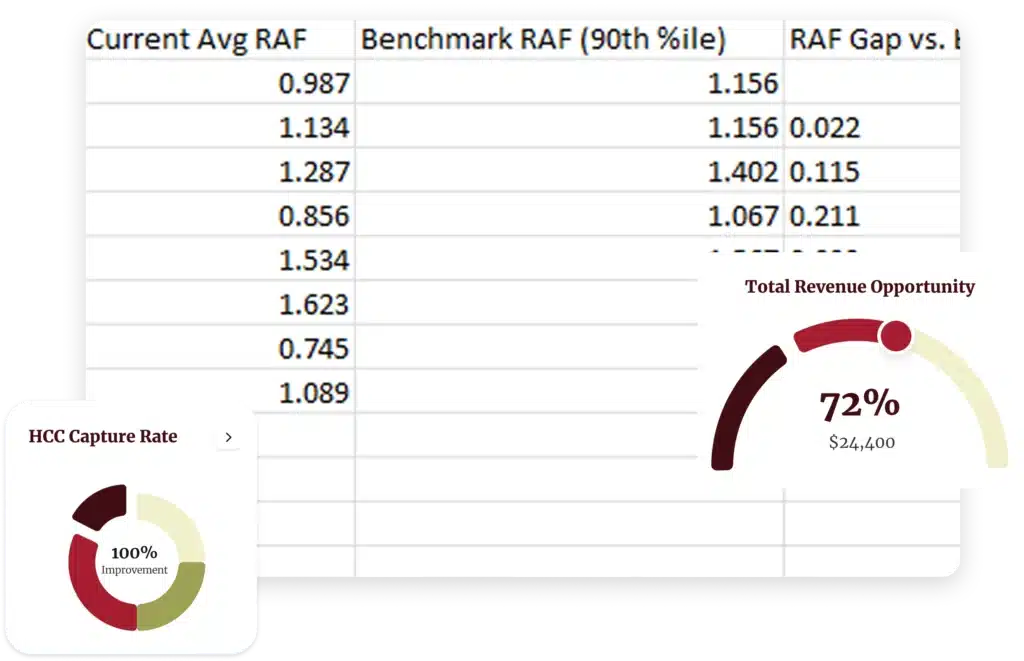
Why This HCC Gap Analysis Worksheet Exists?
Even mature risk adjustment programs struggle with visibility into why HCCs are missed. Claims data, retrospective reviews, and vendor reports often show outcomes, but not the underlying documentation and workflow gaps that caused them.
This worksheet exists to give leaders a clear, structured way to pinpoint where HCC capture breaks down, whether due to documentation gaps, timing issues, or review prioritization challenges, without relying on assumptions or aggressive coding tactics.
What You’ll Get From This Worksheet?
The HCC Gap Analysis Worksheet is designed to be used as a working tool, not a theoretical exercise. It helps teams:
- Compare documented conditions against submitted diagnoses and HCC outcomes
- Identify patterns of missed or under-supported HCCs
- Separate true documentation gaps from timing or workflow issues
- Prioritize review and education efforts based on impact and risk
The focus is on clarity and prioritization, not volume or uplift claims.
Who This Worksheet Is For?
This worksheet is intended for healthcare leaders responsible for risk accuracy and documentation integrity, including:
- Risk Adjustment and VBC Operations Leaders
- HIM and Coding Leadership
- Clinical Documentation Improvement (CDI) Teams
- Compliance and Audit Stakeholders
It assumes familiarity with HCC models and is built to support internal analysis and governance discussions.
How to Use This Worksheet Effectively?
This worksheet should be used as a diagnostic and planning tool. It helps teams understand where HCC gaps originate, which gaps are most material, and where intervention is warranted, before changes are made to workflows or education programs.
Used correctly, it supports defensible risk capture, better prioritization, and stronger audit readiness, without increasing regulatory exposure.
Compliance Embedded in the HCC Gap Analysis Process
Designed to identify documentation gaps while maintaining audit defensibility and regulatory alignment.


Download the Sample Now!
Got Questions?
We’ve Got Answers!
Practical guidance to help leaders use the worksheet accurately, responsibly, and compliantly.
The worksheet is designed to help organizations identify where HCCs may be missed due to documentation gaps, timing issues, or review prioritization, not to increase risk scores through aggressive coding.
No. The worksheet does not guarantee RAF uplift or financial outcomes. It is a diagnostic tool that highlights potential gaps so leaders can decide where further review or education may be appropriate.
No. The worksheet complements existing review processes by providing a structured way to analyze patterns across documentation and coding outcomes. It does not replace formal audits or payer-required reviews.
The worksheet emphasizes documentation-supported diagnoses, traceability, and transparency. It helps distinguish true documentation gaps from workflow or timing issues, supporting defensible risk capture.
The worksheet is best used by:
- Risk Adjustment and VBC Operations Leaders
- HIM and Coding Management
- CDI Teams
- Compliance and Audit Stakeholders
It is intended for internal analysis and planning, not provider-facing enforcement.
No. When used as intended, the worksheet does not change coding or billing behavior. It supports internal analysis and governance discussions without introducing new compliance exposure.
Many organizations use it quarterly or prior to major review cycles to understand trends and prioritize education or process improvement efforts.