


















12 Areas Where Preventive Screening Gaps Generated $1.1M in Uncaptured Revenue
Why Preventive Screening Gaps Are Quietly Draining Healthcare Revenue
Preventive screenings are often framed as clinical quality initiatives. In reality, they function as revenue infrastructure.
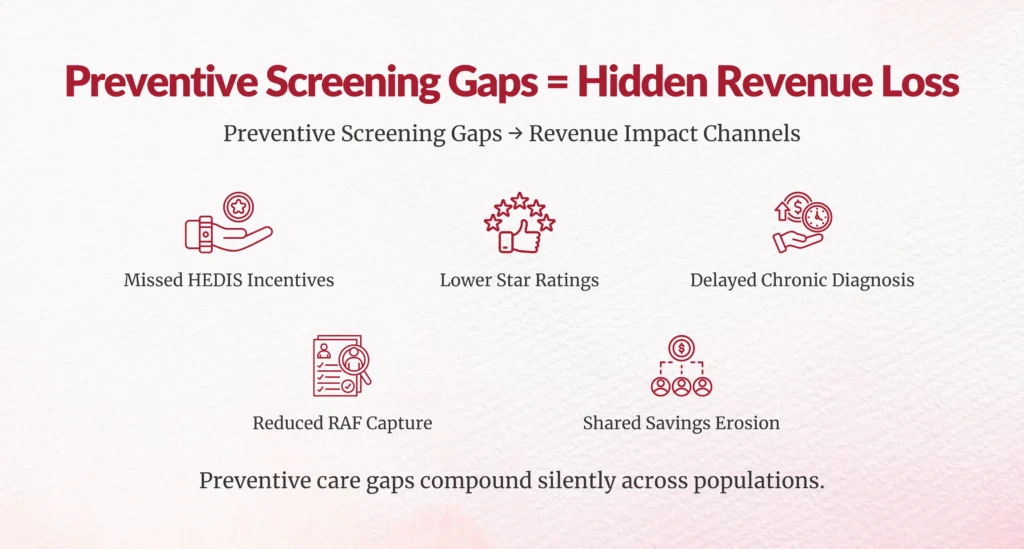
In value-based reimbursement environments, preventive measures influence:
- HEDIS performance
- Medicare Advantage Star Ratings
- Commercial quality bonus eligibility
- Risk adjustment accuracy
- Shared savings qualification
- Long-term cost containment
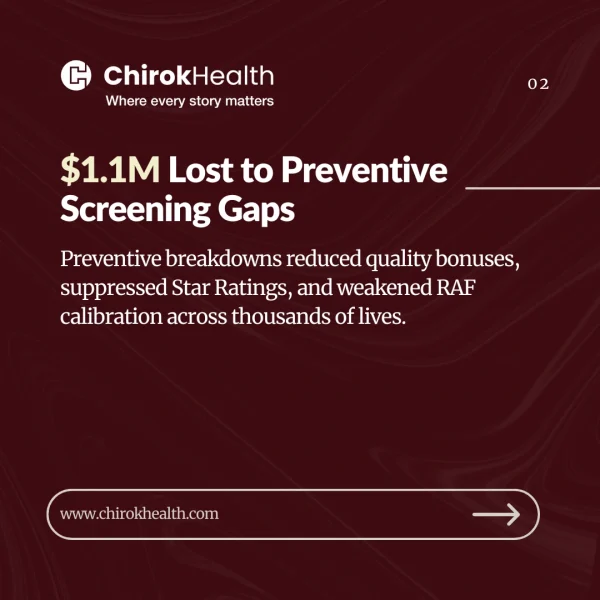
Across a multi-site provider performance review, a pattern emerged: preventive screening gaps were not isolated compliance misses. They were systemic workflow breakdowns. Over a single measurement year, these breakdowns translated into approximately $1.1 million in uncaptured revenue opportunity.
The financial impact materialized through:
- Reduced quality incentive payouts
- Lower Star Ratings performance
- Suppressed RAF score accuracy due to delayed diagnosis capture
- Missed preventive CPT reimbursement
- Erosion of shared savings eligibility
For healthcare leaders overseeing documentation integrity, revenue cycle performance, or value-based contracts, preventive gaps represent silent financial leakage across thousands of lives.
Preventive care integrity is revenue integrity.
How Do Preventive Screening Gaps Convert Into Seven-Figure Financial Loss?
Preventive measures carry financial weight because they sit at the intersection of quality reporting and reimbursement calibration.
When screenings are:
- Not performed
- Performed but not documented properly
- Documented but not coded
- Coded but not reconciled into reporting logic
Performance metrics decline.
The loss does not appear as a denial.
It appears as:
- Missed quality bonus thresholds
- Reduced Star Rating multipliers
- Lower RAF calibration
- Delayed chronic disease recognition
- Increased avoidable downstream utilization
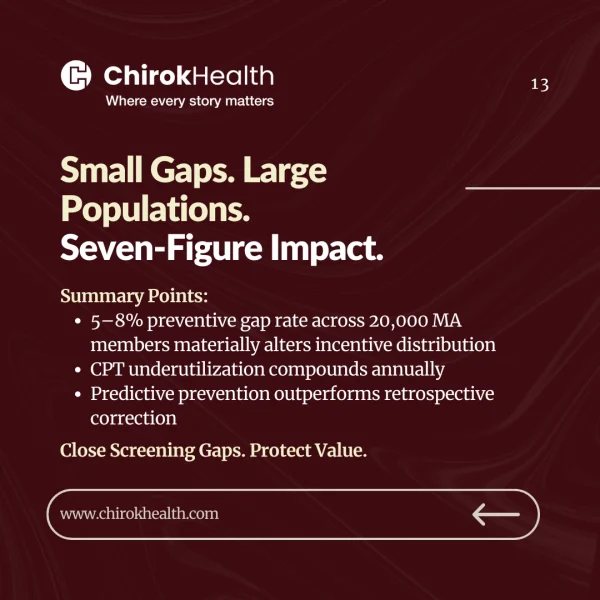
For an organization managing 20,000 Medicare Advantage members, even a 5–8% preventive gap rate across high-weight measures can materially alter annual incentive distribution.
Revenue erosion is incremental but cumulative.
What Did the CPT-Level Analysis Reveal?
A focused review of preventive and screening-related CPT utilization uncovered measurable reimbursement gaps in key departments.
Preventive Screening CPT Opportunity Snapshot
| Department | CPT Code | Total Potential Reimbursement |
|---|---|---|
| Family Medicine | G0444 | $112,575.52 |
| Internal Medicine | G0444 | $331,230.50 |
| Obstetrics & Gynecology | G0101 | $213,511.85 |
G0444 – Annual Depression Screening (15 minutes)
G0101 – Cervical or Vaginal Cancer Screening; Pelvic and Clinical Breast Examination
In these cases:
- Screenings were clinically appropriate
- Documentation supported performance
- Frequency limits were respected
- Operational workflows failed to consistently capture billing opportunity
This table reflects only a portion of the broader $1.1M impact identified across preventive measures.
The pattern was not isolated to one specialty.
It reflected systemic charge capture and documentation-to-billing misalignment.
What Are the 12 Preventive Screening Areas Driving the Highest Revenue Impact?
Below are the twelve preventive areas that generated measurable financial leakage during performance audits.
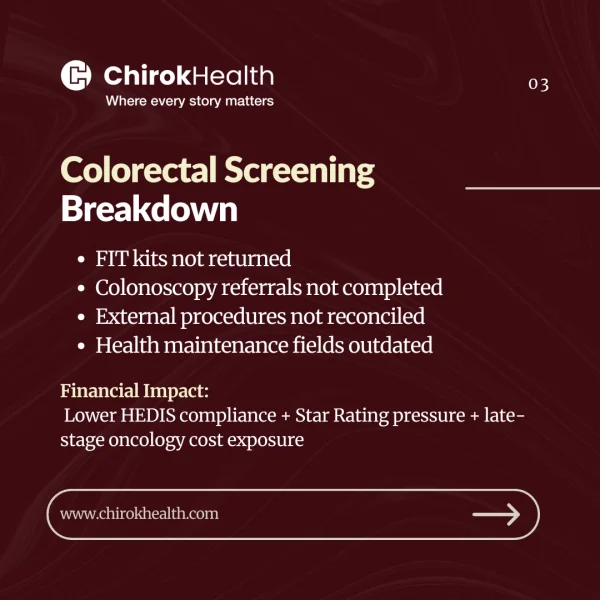
1. Colorectal Cancer Screening Gaps
Colorectal cancer screening for adults aged 45–75 is heavily weighted in quality programs.
Breakdowns included:
- FIT kit non-return
- Colonoscopy referral attrition
- External procedure documentation gaps
- Health maintenance updates not reconciled
Impact:
- Reduced HEDIS compliance
- Lower Star Ratings
- Lost quality incentive eligibility
- Increased late-stage oncology cost exposure
2. Breast Cancer Screening Delays
Mammography compliance directly influences preventive quality performance.
Common failures:
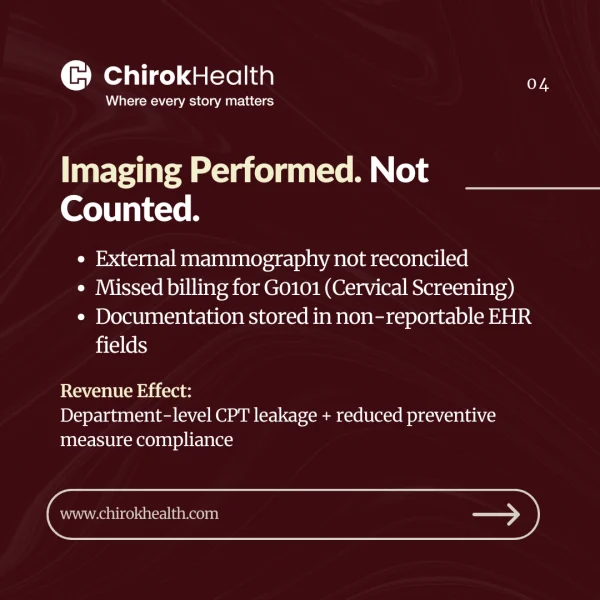
- Imaging completed externally but not reconciled
- Referral tracking failures
- Incomplete documentation closure
When care is performed but not counted, performance metrics decline despite clinical compliance.
3. Cervical Cancer Screening Lapses (G0101)
Pap testing and pelvic exams remain core preventive measures.
Operational gaps included:
- Failure to bill G0101 when appropriate
- Documentation stored in non-reportable EHR fields
- Preventive coding inconsistencies
This created measurable departmental reimbursement gaps.
4. Diabetes Screening and Early Detection Gaps
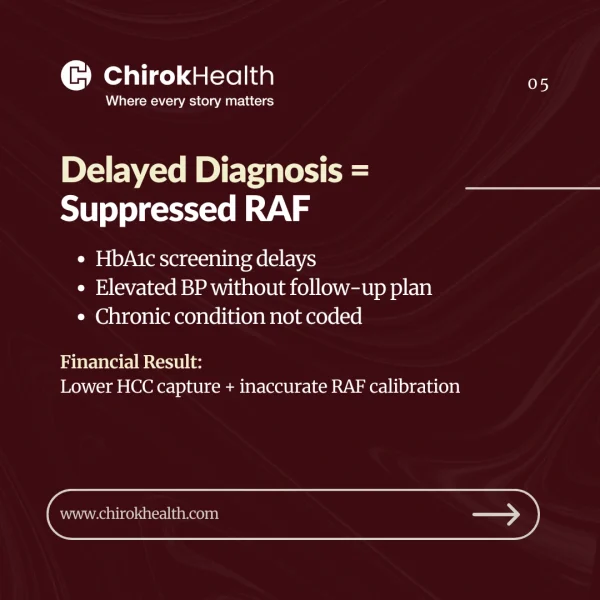
Delayed HbA1c screening in high-risk populations resulted in:
- Late diabetes diagnosis
- Delayed HCC capture
- Suppressed RAF scores
- Missed care management enrollment opportunities
Early detection supports both improved outcomes and accurate risk calibration.
5. Hypertension Screening and Follow-Up Failures
Routine blood pressure readings were documented.
Follow-up care plans were not always.
Common breakdowns:
- Elevated readings without repeat measurement
- No documented assessment
- Hypertension diagnosis not coded
When chronic conditions remain undocumented, risk adjustment capture declines.
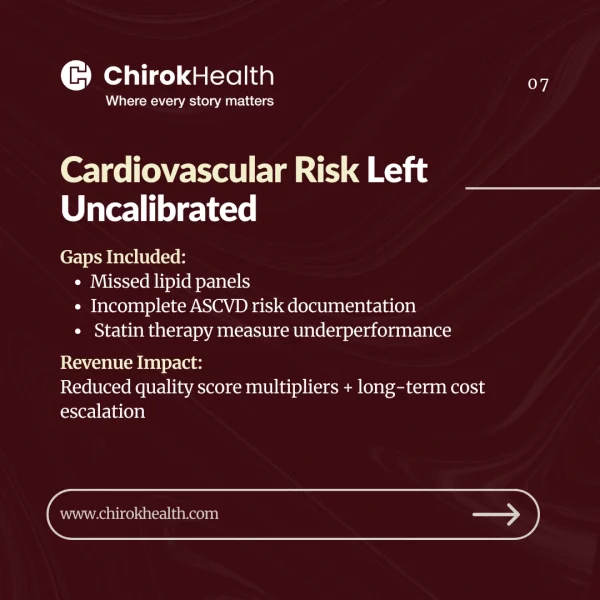
6. Lipid Screening and ASCVD Risk Gaps
Missed lipid panels undermine:
- Cardiovascular risk stratification
- Statin therapy measure compliance
- Preventive cardiology planning
These gaps impact both quality metrics and long-term cost trends.
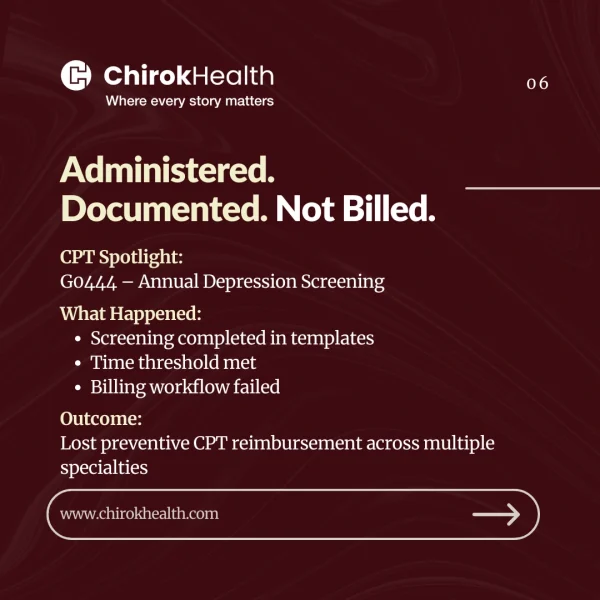
7. Depression Screening Documentation Breakdowns (G0444)
Annual depression screening was frequently:
- Administered
- Documented in templates
- Not billed
When structured screening tools are completed but not operationalized into CPT reporting, reimbursement leakage occurs.
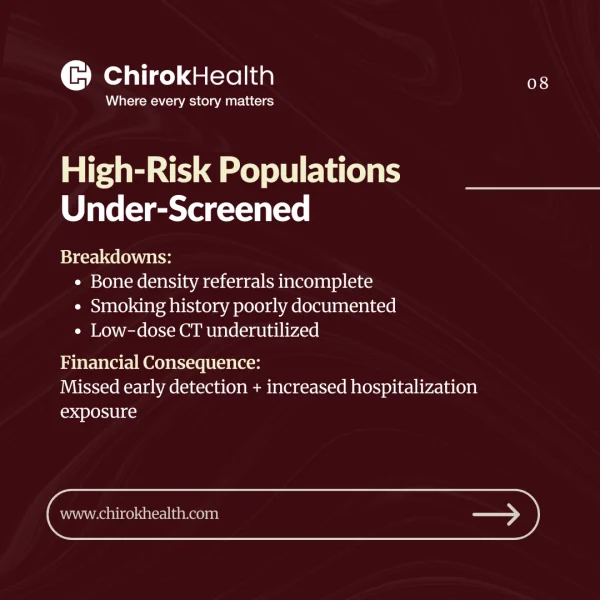
8. Osteoporosis Screening Failures
Bone density testing for women aged 65+ influences preventive compliance.
Gaps included:
- Referral non-completion
- External imaging data not reconciled
- Documentation inconsistencies
Missed screenings increase fracture risk and hospitalization exposure.
9. Lung Cancer Screening Underutilization
Low-dose CT screening for eligible smokers remains nationally underperformed.
Barriers included:
- Incomplete smoking history documentation
- Referral breakdowns
- Limited patient engagement
Delayed early detection increases oncology cost burden.
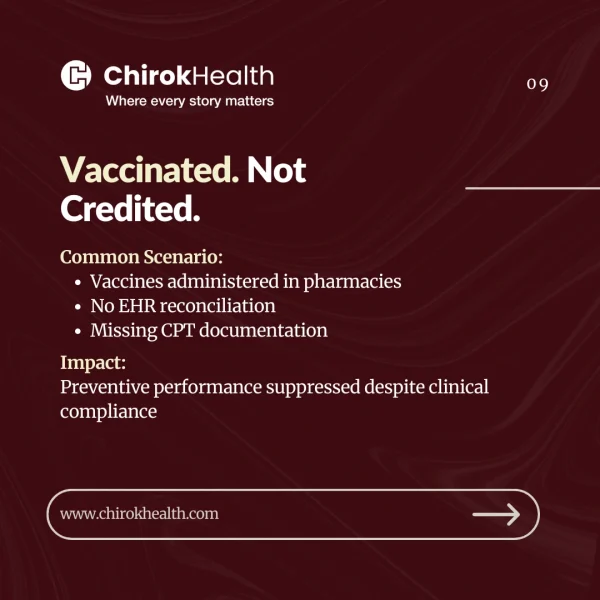
10. Adult Immunization Documentation Gaps
Influenza, pneumococcal, and shingles vaccinations influence preventive metrics.
Common breakdown:
- Vaccinations administered in pharmacies
- No EHR reconciliation
- Missing CPT documentation
Undocumented immunizations equal uncounted performance.
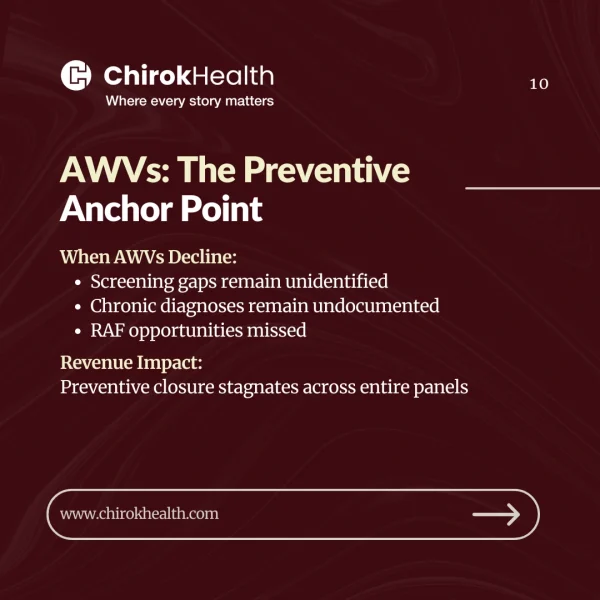
11. Annual Wellness Visit (AWV) Inconsistency
AWVs anchor preventive closure.
When AWV completion rates fall below optimal thresholds:
- Screening gaps remain unidentified
- Chronic conditions go undocumented
- RAF opportunities are missed
AWVs are preventive and financial leverage points.
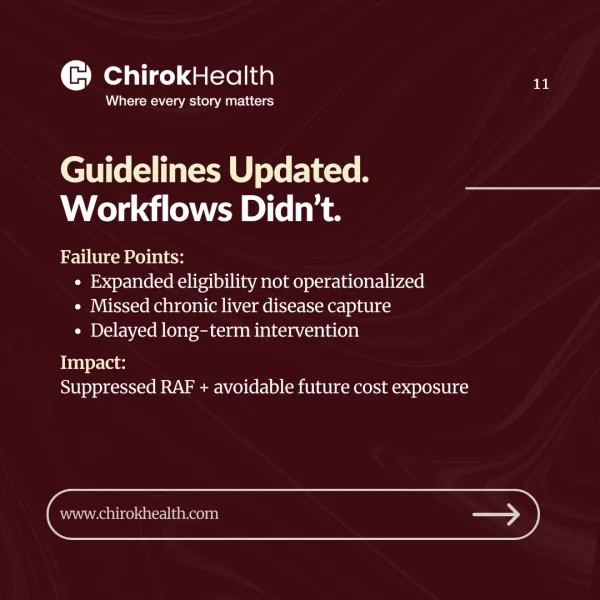
12. Hepatitis C Screening Expansion Gaps
Expanded adult screening recommendations increased eligibility.
Failure to update workflows resulted in:
- Missed diagnoses
- Suppressed chronic liver disease capture
- Avoidable long-term cost escalation
Preventive programs must evolve alongside guideline updates.
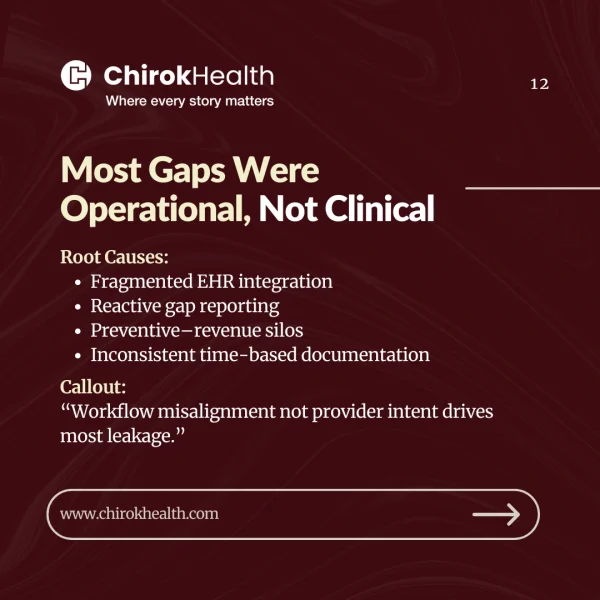
Why Do Mature Organizations Still Miss Preventive Targets?
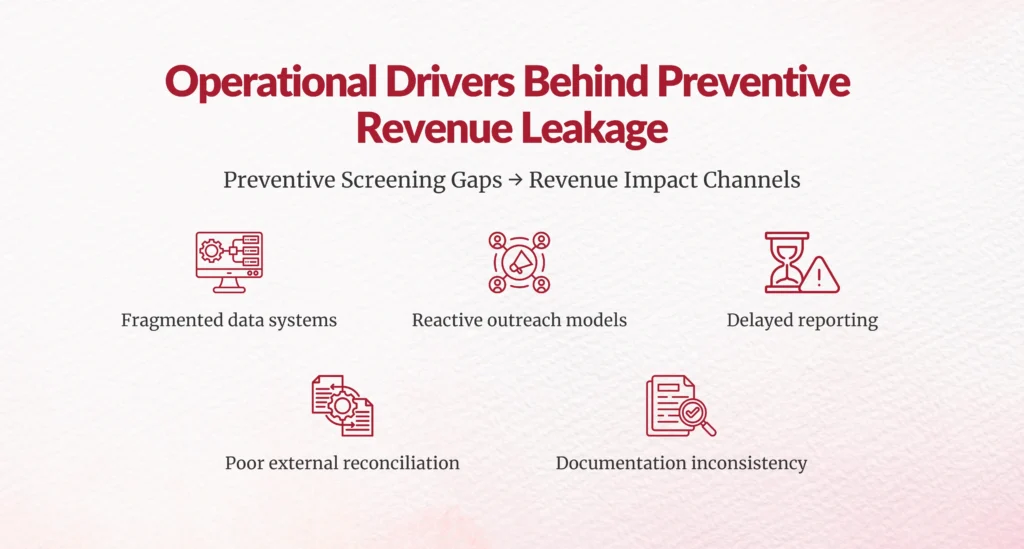
Even sophisticated health systems experience leakage due to:
Fragmented EHR Data Integration
External imaging, pharmacy, and claims feeds may not integrate seamlessly.
Reactive Gap Reporting
Retrospective dashboards identify failure after the measurement window closes.
Preventive–Revenue Silos
Population health and revenue cycle teams often operate independently.
Inconsistent Time-Based Documentation
Counseling services such as 99406, 99407, and G0444 require documented time thresholds. Without structured capture, coders cannot report them.
The issue is rarely provider intent.
It is workflow misalignment.
How Did Screening Gaps Accumulate Into $1.1M?
The revenue impact analysis included:
- Missed quality bonus thresholds
- Reduced shared savings distributions
- Lower RAF calibration across eligible populations
- Underreported preventive CPT services
- Increased avoidable utilization
The $1.1M did not stem from one catastrophic breakdown.
It resulted from incremental preventive leakage across twelve measures.
Small gaps, multiplied across large populations, compound quickly.
How Can Healthcare Leaders Close Preventive Revenue Gaps at Scale?
1. Predictive Gap Identification
Use risk stratification and near-real-time analytics to intervene before measurement deadlines.
2. AWV Optimization
Align Annual Wellness Visits with structured preventive closure workflows.
3. CPT Utilization Variance Reviews
Compare documented screenings to billed CPT frequency quarterly.
4. Real-Time Preventive Dashboards
Provide provider-level performance visibility tied directly to financial impact.
5. Integrated Data Reconciliation
Incorporate pharmacy, imaging, and external claims feeds into reporting logic.
Preventive performance must be treated as enterprise-level financial governance.
Key Executive Takeaways
- Preventive screening gaps directly impact revenue performance
- $1.1M in uncaptured opportunity can accumulate within a single measurement year
- Most gaps are operational, not clinical
- CPT under-utilization compounds incentive loss
- Preventive measures influence both Star Ratings and RAF calibration
- Proactive analytics outperform retrospective correction
Preventive care is no longer a quality initiative alone.
It is a strategic revenue protection mechanism.
FAQs
1. How do preventive screening gaps impact value-based reimbursement?
Preventive gaps reduce quality measure compliance, lower incentive payments, suppress Star Ratings, and delay chronic condition identification that influences risk adjustment calibration. The financial effect is cumulative across large populations.
2. Which preventive screenings carry the greatest financial weight?
Colorectal cancer screening, breast cancer screening, diabetes monitoring, hypertension control, and Annual Wellness Visits typically carry the highest combined quality and risk adjustment impact.
3. Why are screenings often performed but not counted?
Services completed outside the network or documented in non-structured EHR fields may not reconcile into reportable measure logic. Without structured documentation and coding alignment, compliant care does not translate into performance credit.
4. How do preventive gaps affect RAF scores?
Delayed chronic condition diagnosis prevents timely HCC capture, lowering RAF scores and reimbursement alignment within Medicare Advantage populations.
5. What operational strategy most effectively reduces preventive leakage?
Predictive analytics, structured documentation workflows, CPT utilization audits, and AWV-driven preventive closure protocols consistently produce measurable improvement.
6. Is preventive screening primarily a compliance initiative?
No. Preventive screening integrity influences revenue, quality, population health performance, and long-term financial sustainability in value-based contracts.
Author Bio:

Kanar Kokoy
CEO - Chirok Health
Healthcare CEO & CDI/RCM innovator. I help orgs boost accuracy, integrity & revenue via truthful clinical docs. Led transformations in CDI, coding, AI solutions, audits & VBC for health systems, ACOs & more. Let’s connect to modernize workflows.