





















Best Practices in Clinical Documentation 2026 for Health Systems
What Does Best Practice Clinical Documentation Look Like for Health Systems in 2026?
Clinical documentation in 2026 is no longer an operational afterthought; it is a strategic control point for patient safety, reimbursement protection, audit resilience, and organizational performance.
The short answer to what “best practice” means in 2026:
Health systems must shift from retrospective, volume-driven documentation toward real-time, decision-focused, interoperable, and compliance-embedded documentation models that support reimbursement, withstand payer scrutiny, and reduce physician burden simultaneously.
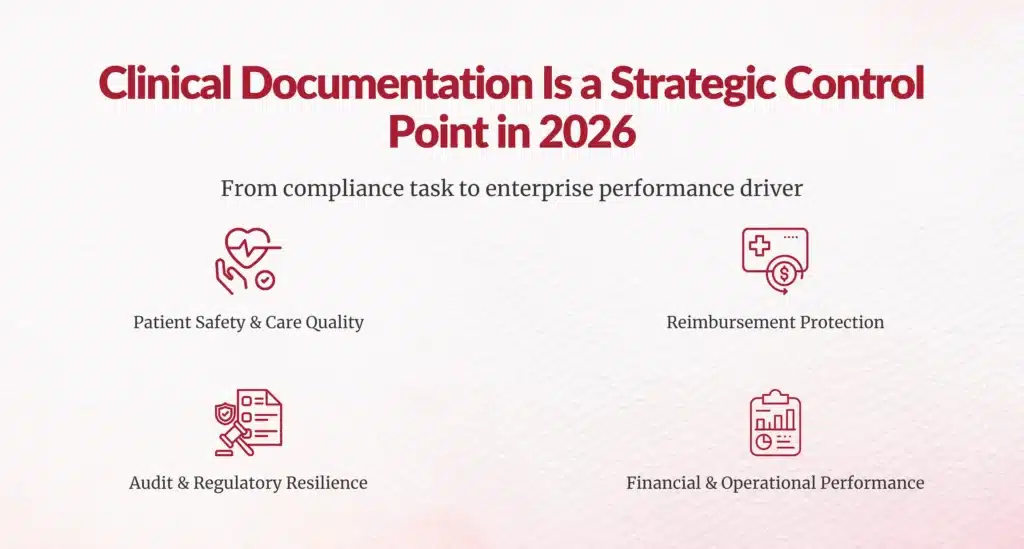
Industry experts across CDI, HIM, Revenue Cycle, Compliance, and Finance consistently agree: documentation is now the connective tissue between quality, cash flow, and regulatory survival.
Below, we break down the most critical best practices health system leaders must operationalize in 2026, based on regulatory mandates, payer behavior, and proven performance benchmarks.
Why Is Clinical Documentation a Strategic Priority for Health Systems in 2026?
In 2026, clinical documentation directly determines:
- Medical necessity approvals
- Denial vulnerability
- Risk adjustment accuracy
- Quality and Stars performance
- Audit outcomes under new CMS frameworks
According to AHIMA, 20–30% of medical records contain documentation gaps that impact reimbursement or quality scores, and nearly 67% of denials are preventable with earlier documentation intervention
For CFOs and VPs of Revenue Cycle, this means documentation quality now has a measurable balance-sheet impact, not just a compliance implication.
What Is the Shift From Volume-Based to Cognitive Documentation and Why Does It Matter?
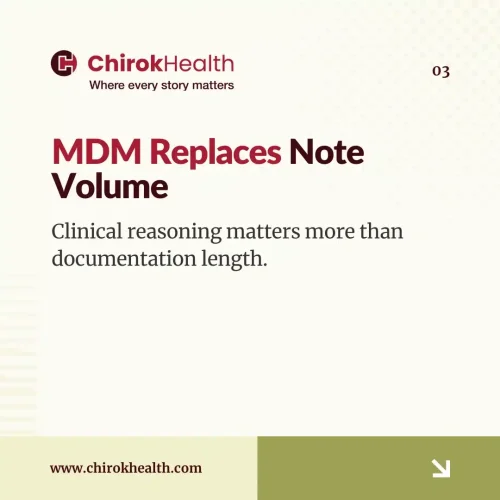
The most important documentation shift in 2026 is the move from volume-based charting to cognitive documentation centered on Medical Decision Making (MDM).
CMS has made it clear that clinical reasoning, not note length, drives compliant E/M coding.
What Should Clinicians Focus on Instead of “Note Bloat”?
Best-performing organizations train providers to clearly document:
- Differential diagnoses considered
- Data reviewed (labs, imaging, prior records)
- Risk stratification and treatment rationale
- Why a decision was made, not just what was done
Health systems that optimized EHR templates around MDM report 25–30% reductions in documentation time while improving audit defensibility.
Why Has Concurrent Coding Review Become the Gold Standard for CDI Programs?
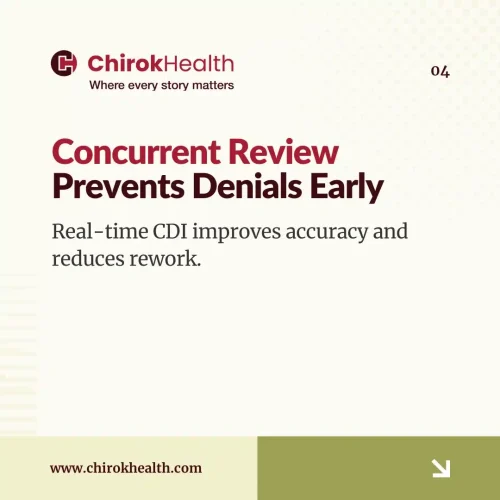
Concurrent review documentation evaluation during active care or before claim submission is now foundational for CDI success.
What Makes Concurrent Review So Effective?
Experts cite three primary advantages:
1.Real-Time Physician Engagement
CDI specialists clarify documentation while providers are still managing the patient, improving SOI/ROM accuracy and medical necessity support.
2.Early Identification of Documentation Gaps
Missing indicators are addressed during care, not weeks later via queries.
3.Reduced Rework and Denials
Organizations significantly reduce downstream appeals, re-coding, and audit exposure.
Top-performing health systems now achieve 70–80% concurrent review penetration for inpatient cases.
How Do 2026 Prior Authorization Rules Change Documentation Requirements?
Beginning January 1, 2026, CMS prior authorization reforms under CMS-0057-F and WISeR require faster, more transparent documentation.
What Must Documentation Support in 2026?
- Explicit medical necessity
- LCD-aligned clinical indicators
- Prior conservative treatments
- Diagnostic confirmation
Why Does CMS Transparency Matter to Providers?
By March 31, 2026, CMS will publicly report:
- Approval and denial rates
- Decision turnaround times
- Appeal outcomes
Denial rationales must be explicit and actionable, raising the documentation bar for providers as much as payers.
How Do Interoperability Mandates Reshape Clinical Documentation?
What Is USCDI V3 and Why Is It Mandatory in 2026?
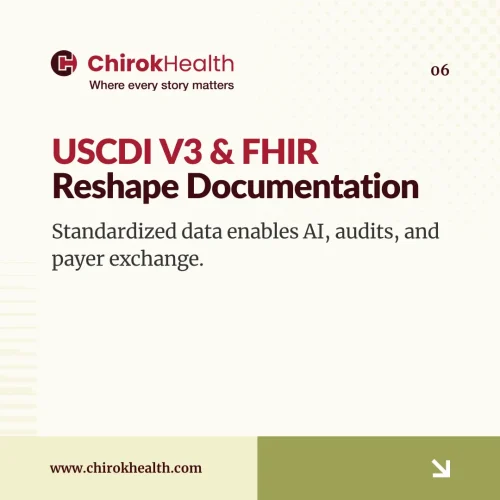
As of January 1, 2026, USCDI Version 3 becomes mandatory, expanding documentation requirements to include:
- Social Determinants of Health (SDOH)
- Patient-Reported Outcomes (PROs)
How Do FHIR and Terminology Standards Affect Documentation?
By mid-2026, documentation must support FHIR-based real-time data exchange, using standardized vocabularies:
- SNOMED CT (conditions)
- LOINC (labs)
- RxNorm (medications)
This structure enables AI-assisted coding, payer data exchange, and audit-ready records.
How Should Health Systems Govern AI-Enabled Documentation in 2026?
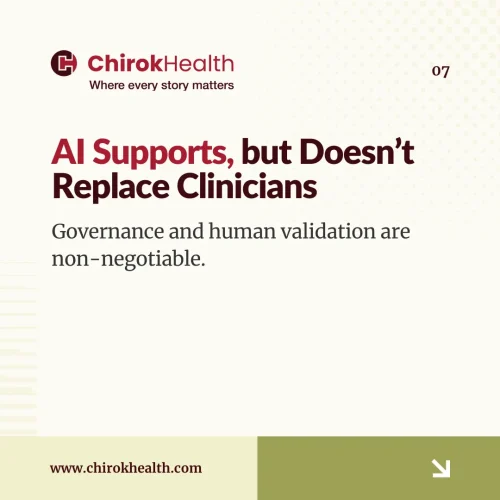
AI scribes and NLP tools are now common but ungoverned AI introduces compliance risk.
What Are Non-Negotiable AI Governance Best Practices?
Experts consistently recommend:
- Human-in-the-loop validation
- Transparent data lineage
- Standardized terminology
- Documented override tracking
- Formal AI risk assessments
In 2026, AI is increasingly used to support medical necessity narratives, audit preparation, HEDIS abstraction, and anomaly detection but only when governance is mature.
What Are Compliant CDI Query Best Practices in 2026?
Queries remain essential, but overuse or poor construction creates audit exposure.
What Defines a Compliant Query?
According to AHIMA and ACDIS:
- Clear reference to record-specific indicators
- Clinically justified rationale
- Neutral, non-leading language
- Multiple clinically valid options
- Explicit “Unable to Determine” choice
High-performing programs audit query practices regularly and limit queries to high-impact, evidence-supported scenarios.
What Documentation Quality Metrics Should Leaders Monitor?
Best-in-class health systems track:
- Documentation completeness rates
- Timeliness of record finalization
- Concurrent review coverage
- Query response rates (target: 75–90%)
- Documentation-related denial trends
- Internal audit pass rates (target: 95%+)
- HEDIS and Stars documentation gaps
These KPIs should be visible through executive dashboards, not siloed CDI reports.

Why Is Compliance Now Embedded in Daily Operations Not Audits?
2026 audit frameworks eliminate “neutral” findings. Each issue is classified as:
- Observation, or
- Corrective Action Required (CAR)
What Governance Structures Support Audit Readiness?
Experts recommend:
- Centralized evidence repositories
- Metadata tagging of documentation actions
- Continuous compliance monitoring
- Automated data integrity validation
Compliance is now an operational discipline, not an annual exercise.
How Do Health Systems Sustain Physician Engagement?
Documentation improvement fails without clinician buy-in.
Best practices include:
- Aligning documentation goals with patient care quality
- Real-time education over retrospective criticism
- Transparent performance feedback
- Streamlined, contextual queries
- Recognition tied to documentation quality
Physicians engage when documentation is positioned as clinical clarity not administrative burden.
What Defines Documentation Excellence in 2026?
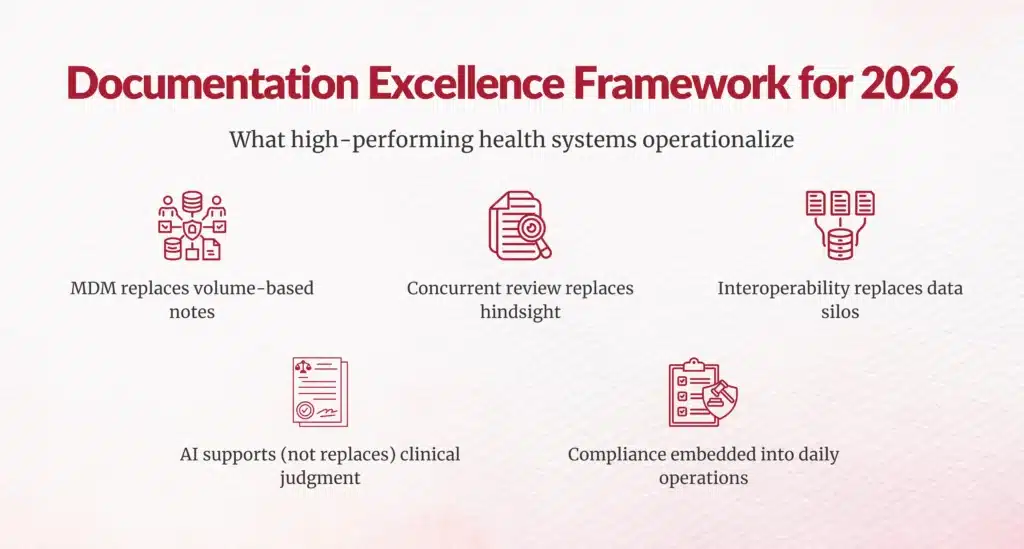
In 2026, best practices in clinical documentation reflect a mature, integrated model where:
- MDM replaces volume
- Concurrent review replaces hindsight
- Interoperability replaces silos
- AI supports not replaces clinical judgment
- Compliance is operationalized, not audited into existence
Health systems that embrace these practices will protect reimbursement, reduce clinician burnout, strengthen audit resilience, and improve care quality, while those that don’t will face rising denials, regulatory risk, and financial leakage.
The future of clinical documentation is proactive, cognitive, and embedded, and the time to operationalize it is now.
FAQs
What does “clinical documentation excellence” mean in 2026 for health systems?
Real-time, decision-focused, interoperable, compliance-embedded models supporting reimbursement, audits, reducing burden; connects quality, cash flow, survival.
Why has clinical documentation become a strategic priority for health systems in 2026?
Determines reimbursement, quality scores, denials (67% preventable per AHIMA), balance-sheet impact amid payer scrutiny.
What is the shift from volume-based to cognitive documentation and why does it matter?
From note bloat to MDM-focused (clinical reasoning); CMS prioritizes reasoning over length, cuts doc time 25–30%, boosts defensibility.
How does concurrent review improve clinical documentation quality and reduce denials?
Real-time engagement, gap fixes during care, 70–80% inpatient penetration cuts rework/appeals.
What documentation elements will CMS require under 2026 prior authorization reforms?
Faster, transparent support for medical necessity under CMS-0057-F/WISeR; explicit denial rationales by March 2026.
How do interoperability mandates like USCDI V3 and FHIR affect clinical documentation?
V3 mandatory Jan 2026 adds allergies, imaging; FHIR/standard vocab (SNOMED, LOINC) enables AI coding, data exchange.
What are best practices for governing AI-enabled clinical documentation in 2026?
Human oversight, explainability, audit trails, mature governance for scribes/NLP in necessity, HEDIS.
Which documentation quality metrics should health system leaders monitor?
Query rates, CC/MCC capture, denial overturns, DRG shift, MDM alignment via executive dashboards.
Why is compliance now embedded in daily operations instead of periodic audits?
2026 frameworks classify all issues (no neutrals); operational discipline via governance structures.
How can health systems sustain physician engagement in improved documentation practices?
Position as clinical clarity, peer champions, EHR optimization, real-time feedback.
Author Bio:

Kanar Kokoy
CEO - Chirok Health
Healthcare CEO & CDI/RCM innovator. I help orgs boost accuracy, integrity & revenue via truthful clinical docs. I've led transformations in CDI, coding, AI solutions, audits & VBC for health systems, ACOs & more. Let's connect to modernize workflows.